跳至主要内容

Laos planning new Mekong River Dam

                                       https://www.boland-hydroturbine.com/
LAOS has submitted plans to build a new hydropower dam later this year and started consultations with the Mekong River Commission (MRC).


The hydropower project is the sixth proposal out of nine planned mainstream Mekong River dams in Laos.And the Sanakham hydropower plant is estimated to cost US$2.073 billion.
Based on the plans, the run-of-river dam will operate all year round and produce 684 mega-watts of electricity.
Chinese news agency Xinhua said that in the notification submitted to the MRC Secretariat based here, the Laos government would provide engineering and technical feasibility studies.
These included the project's social and environmental impact assessments, and sediment and fisheries study,
The construction is expected to begin later this year.
It is projected to be completed by 2028, which is the year the commercial operations are also set to begin.
The energy generated by the project will mainly be exported to Thailand.
The prior consultation process normally lasts six months but could be extended further by the Joint Committee.
It is not meant to approve or disapprove the proposed project, but can propose changes.
The Sanakham project is 1,737km from the sea and about 155km north of the capital.
The MRC is an intergovernmental organisation for regional dialogue and cooperation in the lower Mekong river basin.
It was established in 1995 based on the Mekong Agreement between Cambodia, Laos, Thailand and Vietnam.
Laos had already completed two dams on the Mekong River — the 1,285 megawatt Xayaburi Dam and the 260 megawatt Don Sahong Dam last year.
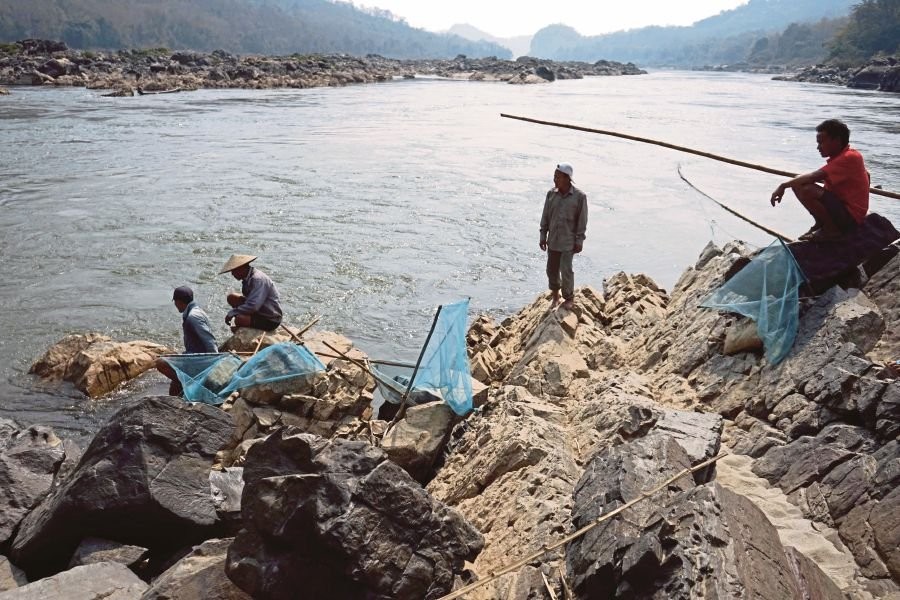
Environmental groups have opposed the dams, saying it threatens a river system whose fisheries, sediment and seasonal flooding for agriculture supported about 60 million people.
China has funded several hydropower projects in Laos and also built 11 dams on the upper reaches of the Mekong River in China.
These dams have come under scrutiny for allegedly altering the river's natural flow.
New Straits Times

评论

此博客中的热门博文

Types of Hydropower Plants

                                                   There are three types of hydropower facilities: impoundment, diversion, and pumped storage. Some hydropower plants use dams and some do not. The images below show both types of hydropower plants. MPOUNDMENT The most common type of hydroelectric power plant is an impoundment facility. An impoundment facility, typically a large hydropower system, uses a dam to store river water in a reservoir. Water released from the reservoir flows through a turbine, spinning it, which in turn activates a generator to produce electricity. The water may be released either to meet changing electricity needs or to maintain a constant reservoir level.                                                www....

Uzbekistan wraps up Kadyrinskaya Hydropower plant modernisation

                                        https://www.boland-hydroturbine.com/   Uzbekistan’s Energy Ministry has announced the completion on time of the three-year project to modernise the Kadyrinskaya Hydropower Plant, which was marked in a ceremony attended by foreign partners and representatives from the Kadyrinskaya HPP-3 plant and Uzbekhydroenergo, Uzbekistan’s state hydropower producer and developer. “The modernisation of the Kadyrinskaya HPP-3 plant is a great step forward in making effective use of Uzbekistan’s hydropower potential and forming a unified system for managing water and energy resources,” Uzbekistan’s Deputy Energy Minister  Sherzod Khodjaev  said. “Progress in Uzbekistan’s hydropower industry will increase energy efficiency and the contribution of renewable energy to the country’s energy balance,” he added. The modernisation of Kadyrinskaya HPP-3 was in...

Uzbekistan’s hydropower potential to boost RES energy balance with EU help

  Uzbekistan’s hydropower potential is growing, and the Central Asian country is looking to boost energy efficiency and increase renewable energy’s share in the country’s energy mix with the help of the European Union, the chairman of Uzbekistan’s state hydropower producer and developer, Uzbekhydroenergo,  Abdugani Sanginov , told New Europe in an exclusive interview. “Hydropower is a renewable energy source and, in this regard, an increase in the share of hydropower in the energy balance of the Republic of Uzbekistan will help reduce the effects of climate change,” Sanginov said, adding that the technically feasible hydropower potential of Uzbekistan is estimated at 27.4 billion kWh per year and currently only 24% of this potential is used. Asked what role the EU can play in supporting renewable energy in Uzbekistan, the Uzbekhydroenergo Chairman said, “The European Union can play an important role in supporting RES in Uzbekistan by providing grants and soft loans for the dev...